The short kit list
A good deer stalking kit list covers the whole outing, not just the shot, and the pieces people forget matter most: bleeding control and a plan left at home.
- A firearm certificate, a rifle and ammunition that meet the law for deer, and permission for the ground
- Binoculars
- A knife, gloves and gralloch kit
- A drag or roe sack
- Quiet, layered clothing for the season
- A paper map, a compass and a head torch
- A first aid kit with bleeding control
- A tick remover and insect repellent
- A charged phone, a power bank and a plan
The law and training
You need a firearm certificate, the right to stalk the ground, and a rifle and ammunition that meet the legal minimum for deer.
A firearm certificate
GOV.UK says you need a certificate issued by the police to possess, buy or acquire a firearm, and to buy ammunition. Apply through your local force’s firearms licensing unit; a certificate usually lasts 5 years. In Scotland, Police Scotland grants certificates; in Northern Ireland, the PSNI does.
Rifles and ammunition for deer
Each nation sets minimum standards for the rifles and ammunition you may use on deer. Read them at source: Deer Act 1991, Schedule 2 for England and Wales, the Deer (Firearms etc.) (Scotland) Order 1985, and the Wildlife (Northern Ireland) Order 1985, Schedule 11.
Permission and hours
Stalking without the owner’s or occupier’s consent, or the legal right, is an offence: see section 1 of the Deer Act 1991 for England and Wales, and section 17 of the Deer (Scotland) Act 1996. In England and Wales (section 3) and Northern Ireland (Article 19), taking or killing deer between 1 hour after sunset and 1 hour before sunrise is an offence, except where the law allows it. In Scotland those hours need an authorisation from NatureScot (section 18), and the Natural Environment (Scotland) Act 2026 is changing how those authorisations work.
Deer stalking qualifications: DSC1 and DSC2
The Deer Stalking Certificates come from Deer Management Qualifications (DMQ), an independent, not-for-profit body. DSC1 is the entry level and mostly theory: biology and ecology, the law, identifying the 6 wild deer species in the UK, safety, a shooting test and large game meat hygiene. It also brings trained person status for supplying carcasses to game dealers, once you have watched an approved carcass inspection video.
DSC2 is entirely practical: a portfolio of evidence built around a stalk watched by a DMQ Approved Witness, from the shot to the carcass entering the food chain. You need DSC1 first. For beginners, DSC1 and outings with an experienced stalker are a good start.
Deer stalking seasons in the UK
Close seasons depend on the species, the sex and the nation, and Scotland removed the close season for male deer in 2023.
Close seasons, when taking or killing that deer is an offence (inclusive dates):
| Deer | England and Wales | Scotland | Northern Ireland |
|---|---|---|---|
| Red and sika stags | 1 May to 31 July | No close season | 1 May to 31 July |
| Red and sika hinds | 1 April to 31 October | 16 February to 20 October | 1 April to 31 October |
| Fallow bucks | 1 May to 31 July | No close season | 1 May to 31 July |
| Fallow does | 1 April to 31 October | 16 February to 20 October | 1 April to 31 October |
| Roe bucks | 1 November to 31 March | No close season | Not listed |
| Roe does | 1 April to 31 October | 1 April to 20 October | Not listed |
| Chinese water deer | 1 April to 31 October | Not listed | Not listed |
| Muntjac | Not listed | Not listed | Not listed |
From Deer Act 1991, Schedule 1; the Scottish order of 2023 and NatureScot; Wildlife (Northern Ireland) Order 1985, Schedule 10. Checked 9 October 2026: check the current law before you go.
In England and Wales the close season offence (section 2) covers only the species in Schedule 1, so the Act sets no close season for muntjac. Red and sika hybrids share the red and sika dates in all 3 sets of rules.
In Scotland, NatureScot says the close season for all male deer ended on 21 October 2023; female seasons are unchanged. Its general authorisation for 2026 to 2027 allows some out-of-season control to prevent damage, under conditions, but not of adult females from 1 April to 31 August.
The kit, piece by piece
Good stalking kit is quiet, warm, and lets you finish the job after the shot.
Binoculars
Good binoculars let you find deer, tell the species and sex (which decide whether the season is open), and see what is behind the animal.
Knife, gloves and gralloch kit
A sharp knife that cleans easily, in a sheath. Disposable gloves, strong bags, some cord, and water or wipes. The gralloch comes soon after the shot, so carry this on you (see handling the carcass).
A drag or roe sack
A drag rope with a handle suits larger deer on open ground; a roe sack, a rucksack with a wipe-clean lining, carries a smaller deer on your back. Plan the extraction before you take the shot.
Clothing for the season
Quiet fabrics in muted colours, layered so you can add warmth when you stop. Hind and doe seasons fall in winter in every nation, so add a waterproof layer, a warm hat, gloves, and boots you can walk in all day.
Map, compass and head torch
A phone map needs battery, and many apps need signal. Carry a paper map of the ground and a compass, and know how to use them together. Add a head torch with spare batteries: winter light goes early, and a drag takes longer than planned.
First aid on the hill
Help can be a long way off, so build a deer stalking first aid kit around what cannot wait: serious bleeding and cold.
Catastrophic bleeding: tourniquet, haemostatic dressing and pressure
St John Ambulance describes a life-threatening bleed as blood pumping from the wound, or bleeding that pressure cannot stop or slow. Its advice:
- Call 999 or 112 straight away and follow ambulance control. If you are alone, put the phone on speaker.
- Press firmly on the wound with a sterile dressing or clean cloth, then bandage it firmly.
- If an arm or leg keeps bleeding despite pressure, apply a tourniquet close to and above the injury, never over a joint. Don’t loosen it, and note the time.
- For a life-threatening wound to the head, neck, chest or abdomen, hold a haemostatic dressing tightly in place for at least 5 minutes, then bandage it.
So the core of a hunting first aid kit is a tourniquet, a haemostatic dressing, a pressure bandage and gloves, carried on you. They are tools for trained hands, so do a course that covers catastrophic bleeding: St John Ambulance and British Red Cross both run them. Our CPR guide is a refresher.
Ticks and Lyme disease
Deer are hosts in the tick’s life cycle, and the risk of infection grows the longer a tick stays attached (Scotland’s Wild Deer Best Practice guide on Lyme disease). UKHSA promotes regular checks and prompt removal. The NHS advises:
- Cover your skin, tuck trousers into socks, and use insect repellent on clothes and skin; products containing DEET are best.
- Check your skin and clothes, and your dog, after being out.
- Use fine-tipped tweezers or a tick-removal tool. Grasp the tick close to the skin and pull upwards slowly, without squeezing or crushing it, then clean the bite.
- A round or oval rash, which may look like a bullseye, usually appears within 1 to 4 weeks but can take up to 3 months. If you get one, or flu-like symptoms, see a GP urgently and mention forests or grassy areas.
Cold, wet and hypothermia
The NHS lists shivering, pale cold skin, slurred speech, slow breathing and tiredness or confusion as signs of hypothermia, and says to call 999 or go to A&E. Carry a spare dry layer, a hat, something to sit on and a hot drink. Our hypothermia guide covers what to do while you wait.
The rest of the kit
Add the basics from a home first aid kit, plus any medicines you need, in a waterproof bag. If a dog works with you, keep your vet’s number on paper in there too.
Going out alone
Before you go, tell someone where you will be, when you will be back, and what to do if you are not.
Scotland’s Wild Deer Best Practice guide on lone working says self-employed and voluntary deer managers need emergency procedures too. It warns that mobile phones may not give adequate coverage, and suggests considering radios or satellite phones. Leave this with someone at home:
- The ground you are stalking, marked on a map
- Where the vehicle will be parked
- When you expect to be back, and when to raise the alarm
- Who to call first, such as the estate or landowner, and then 999
- Your phone number, and who is with you
Don’t count on 999 everywhere. Ofcom has said that when your own network is down, a phone should be able to roam to another network for an emergency call, but where no network reaches, no emergency call is possible. Learn where the signal is on your ground. Charge your phone and a power bank the night before (our power bank calculator shows how many charges you get), and check the Met Office mountain forecast or Live Watch for warnings in force.
Handling the carcass
Gralloch promptly, keep the carcass clean and cool, and have a trained person examine it if it is going into the food chain.
The Food Standards Agency’s wild game guidance for England, Wales and Northern Ireland says, for large wild game:
- Remove the stomach and intestines as soon as possible after killing.
- A trained person examines the body and any viscera removed, as soon as possible, and attaches a numbered declaration with the date, time and place of killing.
- If they suspect abnormalities, all the viscera except the stomach and intestines go with the body, and the hunter informs the competent authority.
- Chill the carcass until the meat is no more than 7°C throughout.
In Scotland, Food Standards Scotland’s wild game guidance also relies on the trained person in the field. DSC1 brings that status, as described above.
Maps and manuals with no signal
SURVIVODRIVE is for the lodge, the vehicle or home, not the hill: it needs a laptop or a Raspberry Pi.
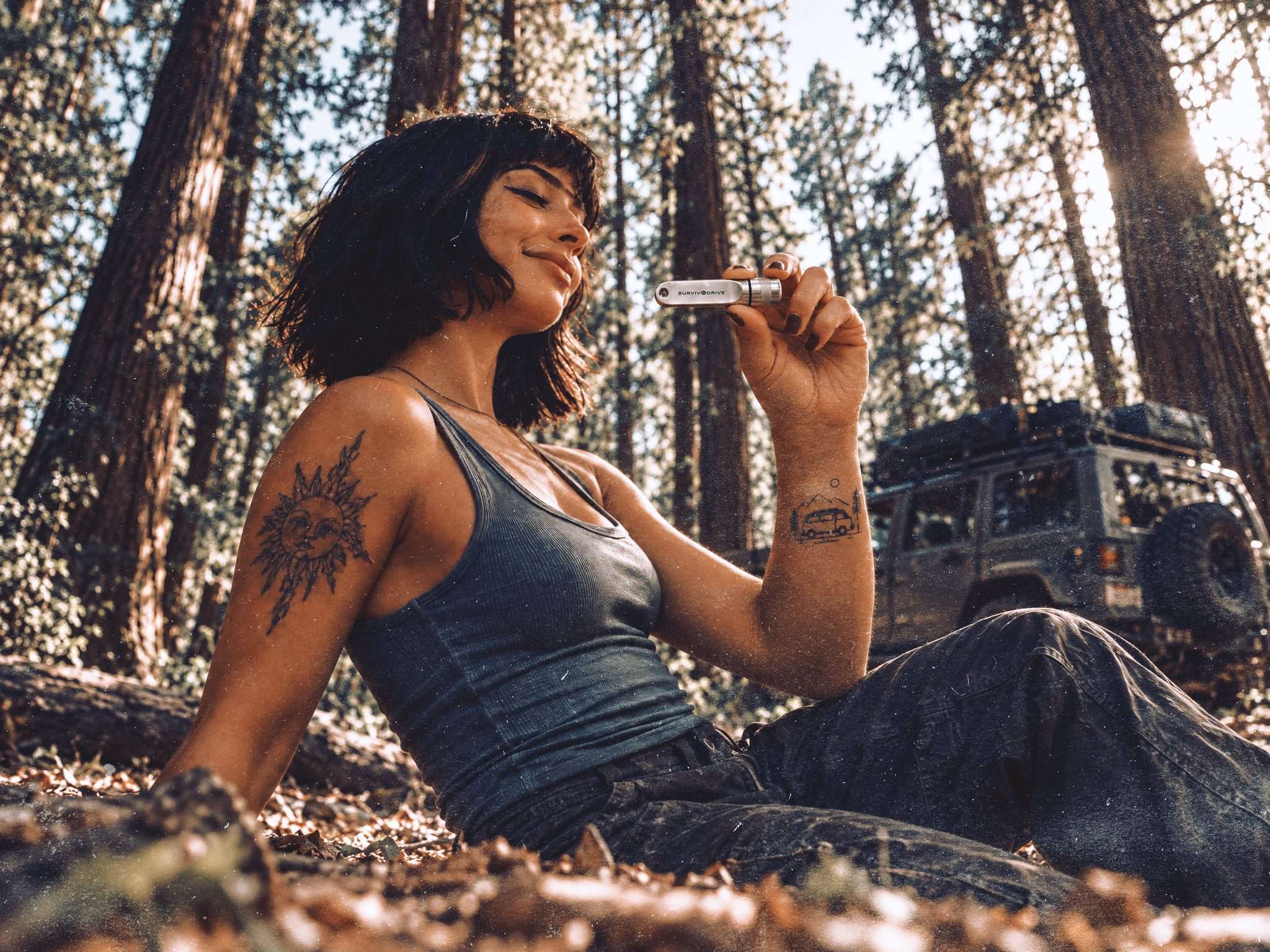
Remote ground, and often the lodge at the end of the track, may have no signal or internet. SURVIVODRIVE is a 256 GB USB drive with an offline library. Plug it into a Windows or Mac laptop and double-click one file; nothing is installed. A Raspberry Pi 4 or 5 runs it too, and phones join over that computer’s Wi-Fi. On the hill, carry your paper map and first aid kit instead.
For stalkers, the useful shelves are:
- An offline OpenStreetMap of the UK, with roads, paths and landmarks
- FM 3-25.26 Map Reading and Land Navigation: map symbols, grid coordinates and compass use
- ATP 4-02.11 Casualty Response, Tactical Combat Casualty Care, and First Aid: bleeding control, airway, fractures and cold injuries
- Where There Is No Doctor: A Village Health Care Handbook, and the WikiMed Medical Encyclopedia
- TC 21-3 Soldier’s Handbook for Individual Operations and Survival in Cold-Weather Areas: clothing layers and preventing hypothermia
- WikiVet, a veterinary encyclopedia that covers working animals: for a dog, call your vet first
FM 3-25.26, ATP 4-02.11 and TC 21-3 are US Army manuals, not UK guidance: they sit alongside a UK first aid course, not instead of it. ATP 4-02.11 and Where There Is No Doctor are also in the drive’s EMERGENCY folder as plain PDFs, so you can print pages for the vehicle. The drive’s small local LLM assistant answers from its own books with numbered sources, and says “Not on this drive.” when they are silent (how it works). See what’s on it.
Keep it cool, dry and out of direct sun: heat speeds data loss, so not on a dashboard in summer. It is £69 with tracked UK delivery. It isn’t on sale yet: pre-orders open by email first, so join the pre-order list to hear when they do.
Questions
D-01What should be on a deer stalking kit list?
A deer stalking kit list should cover the whole outing: your firearm certificate, a rifle and ammunition that meet the law for deer, binoculars, a knife, gloves and gralloch kit, a drag or roe sack, quiet layered clothing, a paper map, compass and head torch, a first aid kit with bleeding control, a tick remover, and a charged phone and power bank. Leave your route and return time with someone at home.
D-02What should be in a deer stalking first aid kit?
Build it around catastrophic bleeding: a tourniquet, a haemostatic dressing, a pressure bandage and gloves, carried on you, and training to use them. St John Ambulance advises calling 999 or 112, pressing firmly on the wound, a tourniquet above a limb wound that keeps bleeding despite pressure, never over a joint, and a haemostatic dressing held for at least 5 minutes on the head, neck, chest or abdomen. Add a tick remover and a spare warm layer.
D-03When is deer stalking season in the UK?
It depends on species, sex and nation. In England and Wales the close seasons are 1 May to 31 July for red, sika and fallow males, 1 November to 31 March for roe bucks, and 1 April to 31 October for females and Chinese water deer. Northern Ireland uses the same red, sika and fallow dates. Scotland has had no close season for male deer since 21 October 2023; females are closed from 16 February (roe does 1 April) to 20 October.
D-04What qualifications do you need for deer stalking?
To own a rifle you need a firearm certificate from the police: your local force in England and Wales, Police Scotland or the PSNI. Stalking qualifications come from Deer Management Qualifications: DSC1 is mostly theory, with tests on identification, safety, shooting and game meat hygiene, and brings trained person status for supplying carcasses to game dealers. DSC2 is practical, a portfolio built around a stalk watched by an approved witness.
D-05Is SURVIVODRIVE useful for deer stalkers?
It is made for the lodge, the vehicle or home, not the hill: it needs a laptop or a Raspberry Pi. It holds an offline OpenStreetMap of the UK, US Army manuals on map reading, first aid and cold weather, Where There Is No Doctor, WikiMed and WikiVet. On the ground, carry a paper map and a first aid kit. It is £69 with tracked UK delivery, and pre-orders open by email first.